TLDR
- A strong invitation timeline helps guests plan, respond on time, and arrive with fewer questions.
- The right timing depends on travel, guest location, and how complex the event is.
- Clear wording and steady follow-up matter just as much as mailing dates.
Intent Sentence
This post helps engaged couples plan their wedding invitation timeline by explaining when to send save the dates, invitations, and RSVP follow-ups, so guests have the information they need and the planning process feels smoother.
Wedding invitations are not only about paper. They are part of how your event begins to take shape for your guests.
A good invitation timeline gives people time to plan, reduces last-minute confusion, and supports the rest of your wedding logistics. A rushed or unclear timeline does the opposite. It creates follow-up questions, delayed responses, and more stress than necessary.
The good news is that this part of the process gets much easier when you think of it as a sequence instead of one big mailing moment.
Start With Your Guest Information Early
Before you think about printing or mailing, get your guest information in order.
Collect names, mailing addresses, and any household details that matter for addressing. It is much easier to do this earlier than to scramble for missing information right before you need to send something out.
This also helps you catch guest list issues early, before they show up in your invitation count or seating plan.
Save The Dates Come First When Guests Need Time
Save the dates are especially helpful when guests may need to travel, book hotels, request time off, or coordinate childcare. They are also helpful when your wedding lands on a busy weekend, a holiday weekend, or a date that could create scheduling conflicts.
They do not need to include every detail. Their job is simple. Let guests know the date, location, and that a formal invitation will follow.
Invitations Should Feel Clear, Not Crowded
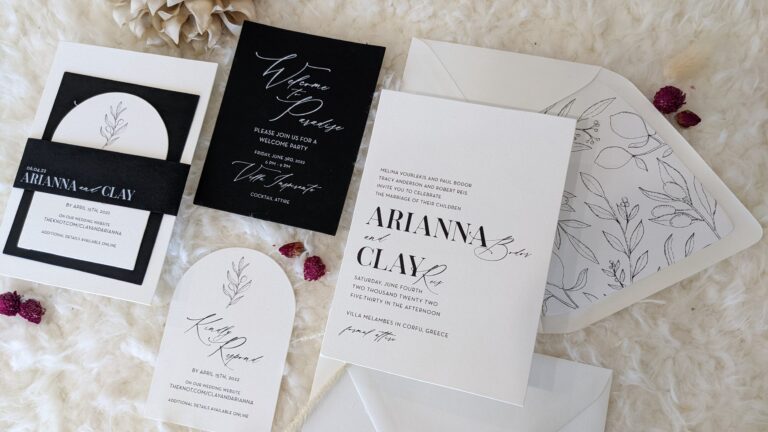
Your formal invitation should answer the main guest questions clearly.
What is happening. When it is happening. Where it is happening. When responses are due. How guests should reply. Anything else that truly belongs in the main invitation suite should support those essentials, not bury them.
If you have more layered details like hotel blocks, transportation notes, dress guidance, or weekend schedule items, those often work better on an enclosure card or wedding website than on the main invitation itself.
RSVP Timing Deserves More Thought Than People Give It
Your RSVP deadline should give you enough time to follow up with missing responses, organize seating, confirm counts, and communicate final details without feeling rushed.
Too early, and guests may forget or need to change plans later. Too late, and the deadline becomes stressful for you.
The right timing depends on your vendor deadlines and how many moving parts your event includes, but the larger point is this: your RSVP deadline should support your planning process, not squeeze it.
Follow Up Calmly And Clearly
Even with a well-planned invitation timeline, some guests will still need a reminder.
That does not mean you did anything wrong. It is normal.
Keep follow-up messages simple and clear. Confirm whether they will be attending and remind them of the response deadline. You do not need a dramatic message. Just a polite one that makes it easy to answer.
Do Not Forget The Day-Of Paper Details
Your invitation timeline often connects to other printed details too.
Menus, place cards, welcome signage, ceremony programs, seating displays, and thank-you notes all work better when they are considered early enough to feel intentional instead of rushed. They do not all need to be designed at once, but they do benefit from a clear planning window.
A Good Invitation Timeline Supports The Entire Experience
Guests notice when communication feels thoughtful.
A clear invitation timeline does more than get people to respond. It helps the wedding feel organized before the day even arrives. It supports better guest preparation, smoother planning, and a calmer final stretch for you.
That is what makes it worth doing well.
FAQs
Do we always need save the dates?
Not always, but they are especially helpful when many guests are traveling or need advance notice.
What belongs on the main invitation?
The essentials: who, what, when, where, and how to respond. Extra details can often live elsewhere.
What if guests miss the RSVP deadline?
A polite follow-up is normal. Build enough time into your planning process so you are not relying on every response arriving exactly on time.